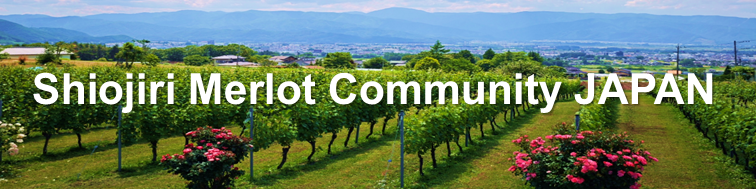
Shiojiri City is located in the heart of Nagano Prefecture, in the southern part of the Matsumoto Basin, covering approximately 290 square kilometers—just under half the size of Tokyo’s 23 wards. It borders Matsumoto City to the north, where Matsumoto Airport is located. The city is well connected to Tokyo and Nagoya via the JR Chūō Main Line and major expressways, including the Nagano Expressway, which branches off from the Chūō Expressway.
Shiojiri has a population of approximately 65,000 as of 2024. Its economy is diverse, with key industries including agriculture—primarily vegetable and fruit cultivation—Nagano Prefecture’s leading information technology and precision manufacturing sectors, and tourism, highlighted by attractions such as Narai-juku, a historic post town.
“Japan Wine” refers specifically to wine produced in Japan using grapes that are 100% harvested domestically. According to government statistics published in 2023, total Japan Wine production was 1,100 kiloliters. The top three producing regions were Yamanashi Prefecture, ranked first with 3,466 kiloliters; Nagano Prefecture, second with 3,049 kiloliters; and Hokkaido, third with 2,484 kiloliters.
Regarding red wine specifically, Nagano Prefecture ranked first, producing 1,945 kiloliters—38.5% of Japan’s total—followed by Yamanashi Prefecture with 1,147 kiloliters and Hokkaido with 780 kiloliters. Shiojiri City was the leading producer of Nagano’s red wine, excelling in both grape cultivation and winemaking.
In Shiojiri City, grape cultivation began in 1890 (Meiji 23), and by 1897 (Meiji 30), winemaking had commenced. Since then, the city has developed into one of Japan’s leading wine-producing regions. In 2014 (Heisei 26), the city established “Wine University” to support newcomers to grape farming and encourage the establishment of wineries.
Based on the “VIN VOYAGE! SHIOJIRI” brochure published by the Shiojiri City Tourist Section in October 2021, the wineries can be categorized by their geographical locations and sorted by establishment dates approximately as follows:
GOICHI WINE was established in 1911 and is located in the Souga District. IZUTSU WINE was esatblished in 1933 and is located in the Souga District. Suntory Shiojiri Winery was established in 1936 and is located in the Daimon District. Château Mercian, established in 1877, opened its Shiojiri facility in 1938, which later became the present-day Kikyogahara Winery, located in the Souga District. Kido winery was established in 2004 and is located in the Souga District.
SINANO WINE was established in 1916 and is located in the Seba District. VOTANO WINE was established in 2010 and is located in the Souga-Seba District. Belly Beads Winery was established in 2018 and is located in the Souga-Seba District.
Iwadarehara is a key vineyard region. Wineries in Shiojiri, such as Suntory Shiojiri Winery and IZUTSU WINE, produce wine using grapes cultivated here.
IZUTSU WINE produces Naraigawa, a branded wine made from grapes cultivated on the right bank of the Narai River in the Matsumoto Basin, outside the Kikyogahara zone.
Shigakukan High School holds a winery license, allowing students to gain hands-on experience in grape cultivation and winemaking. Additionally, the school sends a select number of students abroad, with support from Shiojiri City, to study international winemaking practices.
nagano-wine.jp is the most comprehensive website on Nagano wine, managed by the Nagano Prefecture’s Department of Commerce, Industry, and Labor—Manufacturing Promotion Division, Sake & Wine Promotion. The site provides a clear and informative introduction in English. Below is a list of key content we recommend reading.