The Narai River originates from Mount Chausu (elevation 2,653 m), a peak connected to Mount Kisokoma (elevation 2,956 m), the highest summit of the Central Alps. Flowing past the Nakasendo post towns of Narai-juku, Niekawa-juku, Motoyama-juku, and Seba-juku, it joins the Azusa River in Matsumoto City to become the Sai River, then merges with the Chikuma River in Nagano City. In Niigata Prefecture, it becomes the Shinano River—the longest river in Japan—before emptying into the Sea of Japan.
Narai-juku is the 34th of the 69 post towns along the Nakasendo. The Nakasendo was one of the five major highways established during the Edo period, linking Nihonbashi in Edo (now Tokyo) with Sanjō Ōhashi in Kyoto. Situated on the left bank of the Narai River at an elevation of 940 meters, Narai-juku is the second-highest post town on the Nakasendo, after Karuizawa-juku (960 m). The town stretches gently downhill for about one kilometer along the Narai River, from the Shizume Shrine—located at the Kyoto-side entrance to the Torii Pass (1,197 m)—and is often called “the longest post town in Japan.” Since the Edo period, Narai has been known for its thriving woodworking industry, particularly Kiso lacquerware. Today, the historic townscape is preserved as an Important Preservation District for Groups of Traditional Buildings in Japan.
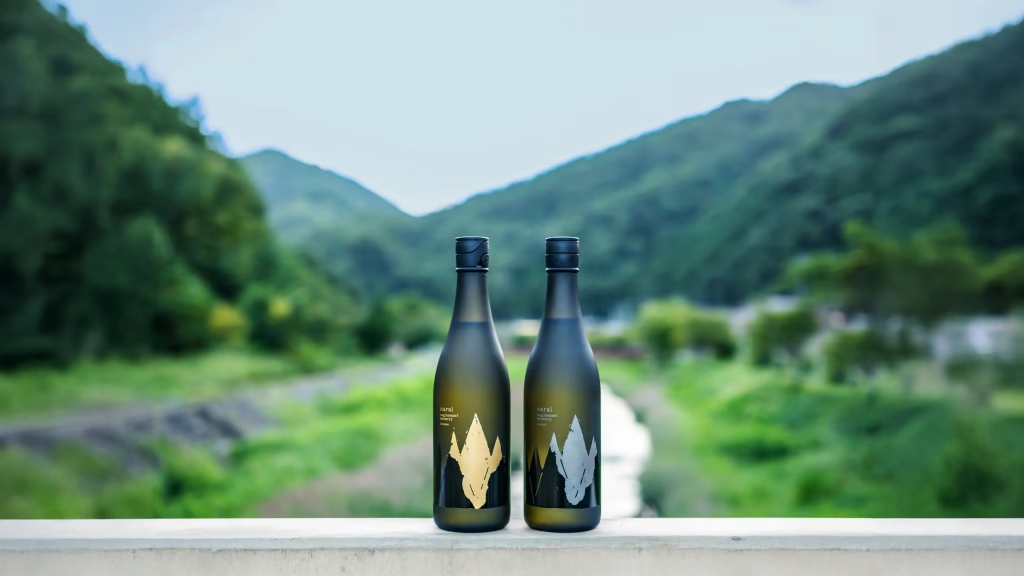
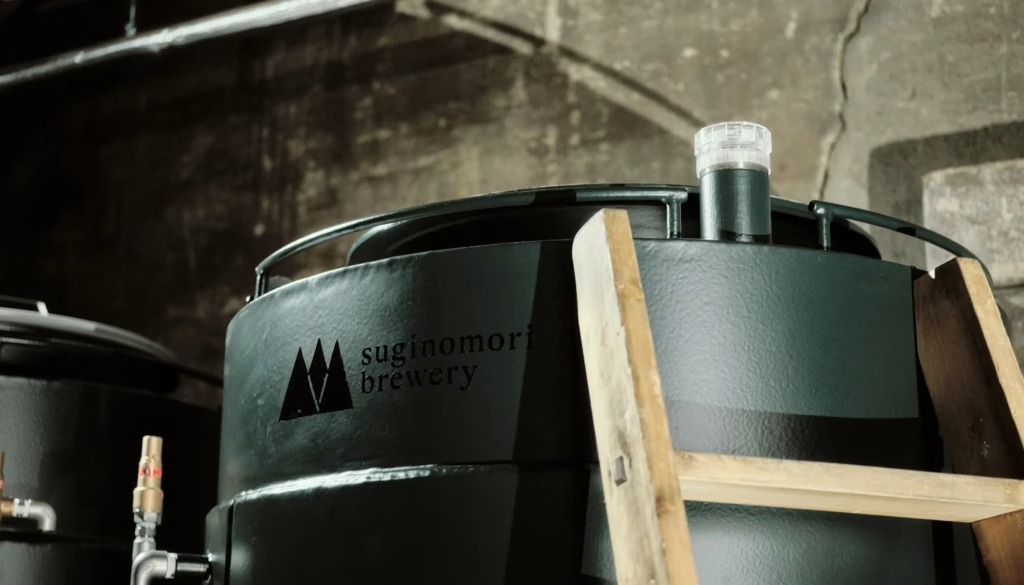
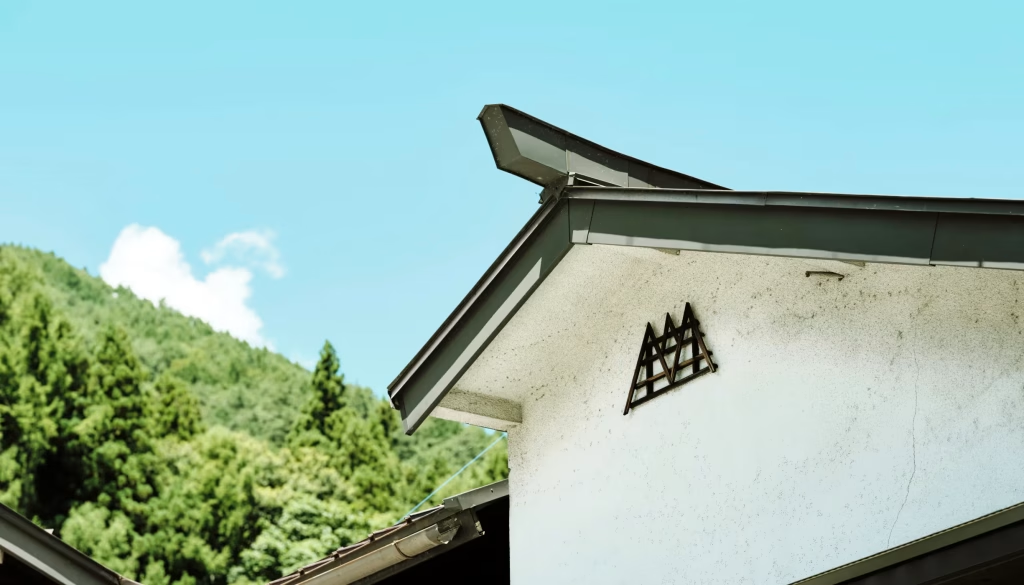
In 1793, during the Kansei era of the mid-Edo period, Suginomori Shuzō was founded in the heart of Narai-juku. Using pure spring water from the surrounding mountains, it brewed sake that offered rest and comfort to travelers along the Nakasendo. For over two centuries—through the Edo, Meiji, Taishō, and Shōwa eras—it continued producing fine local sake of the Kiso region. After ceasing operations in 2012, the brewery was revived in 2021 under the name suginomori brewery (Suginomori Shuzō), carrying its tradition into a new era.